Web Design Services

Web Design That Brings In Work
Web design services here start from one idea: a site for a plumber, a coach or a clinic has one job - turn somebody searching for what you do into a call, a form submission or a booking. Everything else is decoration.
Most small business sites fail for one of two reasons — built from a stock template that looks like every other business in the trade, or built by someone who then disappeared, leaving the owner unable to change a phone number without paying for it. I build custom WordPress sites in Elementor for owners who want neither, and that is what the web design services below cover.
Get A Fixed Price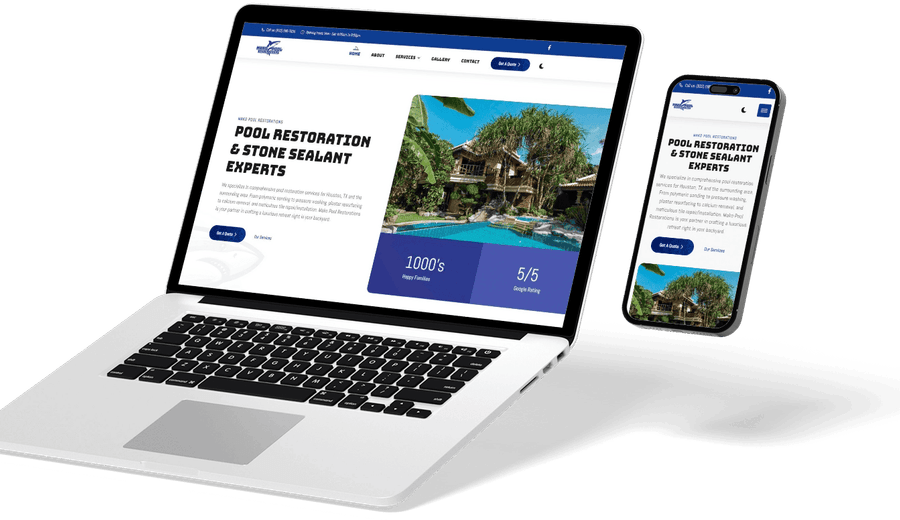

Web Design By Industry
Some trades have their own version of this page, because the structure that wins work in one is not the structure that wins it in another. A roofing site lives or dies on storm damage pages and photo galleries; a plumbing site lives on a tappable phone number. Not listed? The build is the same either way.

Roofing Website Design
Storm damage pages, a page per roof type, and the proof a five-figure job needs.
See The Page
HVAC Website Design
Built for the two demand spikes a year, with install and repair split properly.
See The Page
Plumber Website Design
Emergency-first layouts, tappable numbers, and a page per job type.
See The Page
Electrician Website Design
License and insurance front and center, with a page per type of work.
See The Page
Garage Door Website Design
Repair-versus-replace pages and same-day service call messaging.
See The Page

A Few Sites I've Built
I work with trades, local service businesses, coaches and clinics across the UK and US. Every site is WordPress and Elementor, built to bring in calls and bookings, not just sit there looking nice.
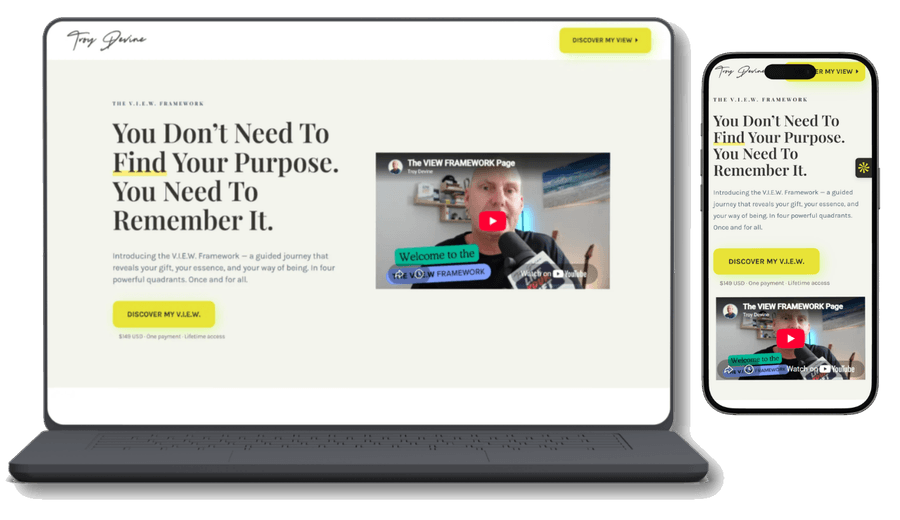
Troy Devine
The landing page for his V.I.E.W. Framework, a course that walks people through finding their purpose. I built out the Gravity Forms styling, set up the Mailchimp double opt-in, and put together the automated email sequence that fires once someone signs up.
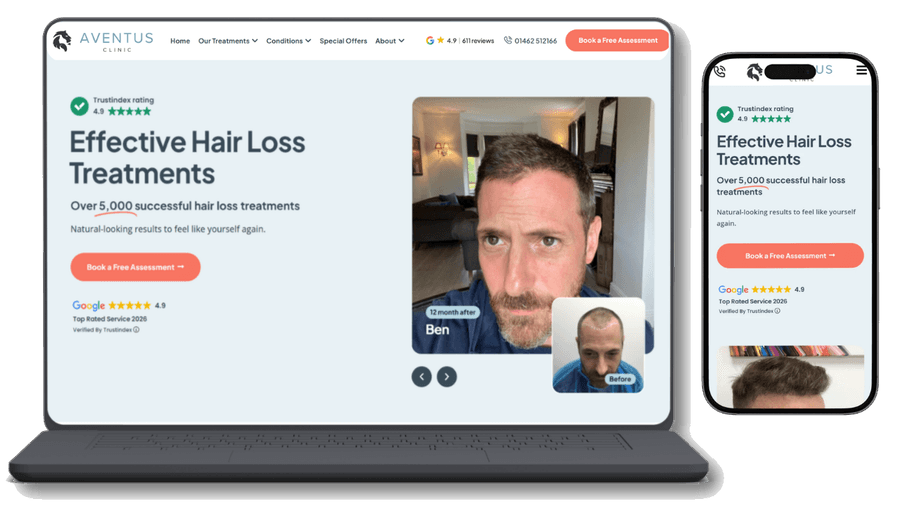
Aventus Clinic
A UK hair loss clinic sitting at 4.9 on Google with 600+ reviews and over 5,000 treatments done. I built the treatments page and the before and after gallery, so people go straight from seeing results to booking a free assessment.
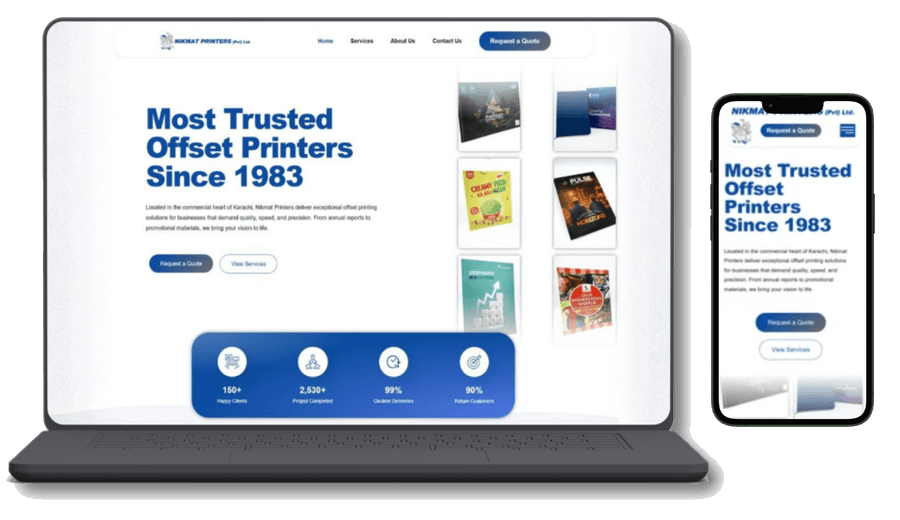
Nikmat Printers
An offset printing company in Karachi, running since 1983 with no online presence at all. I built their site around the branding and reputation they already had offline, so the people searching for a printer could finally find them. Quote requests are up 240%.


A Website Is Not A Brochure
A site for a plumber, a coach or a clinic has one job: turn somebody searching for what you do into a call, a form submission or a booking. Everything else is decoration. Most small business sites fail for one of two reasons — built from a stock template that looks like every other business in the trade, or built by someone who then disappeared, leaving the owner unable to change a phone number without paying for it.
I build custom WordPress sites in Elementor for owners who want neither. Heavier work — stores, migrations, rescue jobs — runs through WordPress development instead.
Loads Before People Leave
Most visitors abandon a page that hasn't shown them anything in about three seconds. Sub-2-second load times as standard: images compressed and sized before upload, as few plugins as the job needs, caching configured properly.
Works On A Phone First
Most local traffic arrives on a phone, one-handed and in a hurry. Laid out for the small screen first, then checked on real devices before launch rather than resized in a browser.
Tells Google What You Do
On-page SEO foundations in every build, not an upsell: sensible page structure, one clear heading per page, per-page titles and meta descriptions, alt text, clean URLs.
Makes The Next Step Obvious
Calls to action sit where the decision gets made, phone numbers are tap-to-call, and forms ask the minimum needed to start a conversation. Long forms lose people.
Stays Editable By You
Built in Elementor, so changing a price or adding a testimonial on a Tuesday afternoon does not mean raising a ticket and waiting.
Belongs To You
Your hosting, your domain, your files. No platform license, no minimum term, no clause that takes the site with me.

- 5 Steps To Launch
- 50+ Projects Delivered
- 5/5 Client Reviews

Five Steps, Fixed Price
Quoted before anything starts, so the number never moves mid-project. Not sure how your current site performs? Run it through Google PageSpeed Insights first — most small business sites score worse than the owner expects.
- Call, then plan. We talk through what the business sells and who you want to reach, and you get a page-by-page outline with a fixed quote. No charge, and if I am not the right fit I will say so.
- Build, with a live preview link as it comes together, so you watch it develop instead of getting one reveal at the end. That is when mismatches surface, and when they are cheapest to fix.
- Revise, then launch. We work through your changes before anything goes public, and at handover I walk you through editing it yourself.
 Call, then plan. We talk through what the business sells and who you want to reach, and you get a page-by-page outline with a fixed quote. No charge, and if I am not the right fit I will say so.
 Build, with a live preview link as it comes together, so you watch it develop instead of getting one reveal at the end. That is when mismatches surface, and when they are cheapest to fix.
 Revise, then launch. We work through your changes before anything goes public, and at handover I walk you through editing it yourself.
Fixed Prices, Published
- Starter
- Custom Elementor design, not a template
- Up to 5 pages
- Mobile-first, tested on real devices
- Contact form set up and connected
- On-page SEO foundations
- Live in 7–14 days
- SEO-structured service pages
- Multi-step quote/lead form
- Growth
- Everything in Starter
- Up to 8 pages
- SEO-structured service pages
- Conversion-focused layout
- Multi-step quote/lead form
- Live in 14–21 days
- Schema markup for services
- Priority build queue
- Scale
- Everything in Growth
- 12–15+ pages
- Service-area & location pages
- Schema markup for services
- Priority build queue
- Live in 21–28 days


Web design services here run 7–14 days for a Starter build, 14–21 for Growth, 21–28 for Scale. The clock starts when I have your content, not when you pay - waiting on text and photos is the single most common cause of delay.
Yes, outright. Your hosting, your domain, your files. You can move it, sell it or hand it to another developer at any point without asking me.
Yes. Every build is Elementor and I walk you through it at handover. Changing text, swapping a photo or adding a page is something you do yourself in a few minutes.
You do, by default - you know your business and your customers better than I do. I tell you exactly what each page needs and roughly how long it should be, so it is never a blank page.
No. The site goes on your own hosting account in your name, which is what keeps it yours. I will tell you what to buy and set it up, and you can move host later without involving me.
Yes. These web design services run remotely over email and scheduled calls, so location does not change what I can build. Most clients are in the US, UK, Canada and Australia.
Web design services can only give you the structural foundations ranking depends on: clean markup, fast load times, a sensible page structure and per-page titles. Rankings themselves take months and depend on your reviews, your competition and your Google Business Profile. Anyone promising page one by a date is guessing.
You can run the site yourself, or take a care plan so updates, backups and monitoring are handled for you. The plan is optional and canceling it never costs you the site.
What Clients Say
Clients across the UK, the US, Canada and Australia. Every quote below comes from a completed Upwork contract, so you can check them yourself rather than take my word for it.
View all verified reviews on Upwork
Mazhar was excellent to work with from start to finish. He was very attentive, asked great questions, and truly listened to my vision. He delivered a clean, conversion-focused landing page that came out even better than I expected.
Matthew Kopp New York, USA Verified on UpworkAmazingly professional. At every stage of the timeline, Mirza produced the results I was looking for. He added his own creative flare and challenged my thinking at times, which was well aligned with my brand. I'm already setting up a new contract for the next stages.
Troy Devine Sydney, Australia Verified on UpworkMirza is very professional and a pleasure to work with. He's detail oriented and always gets my confirmation before completing any task. This was actually my second time hiring him for my website, and he's probably the only person I'll work with on it going forward.
Deborah Delaware, USA Verified on Upwork